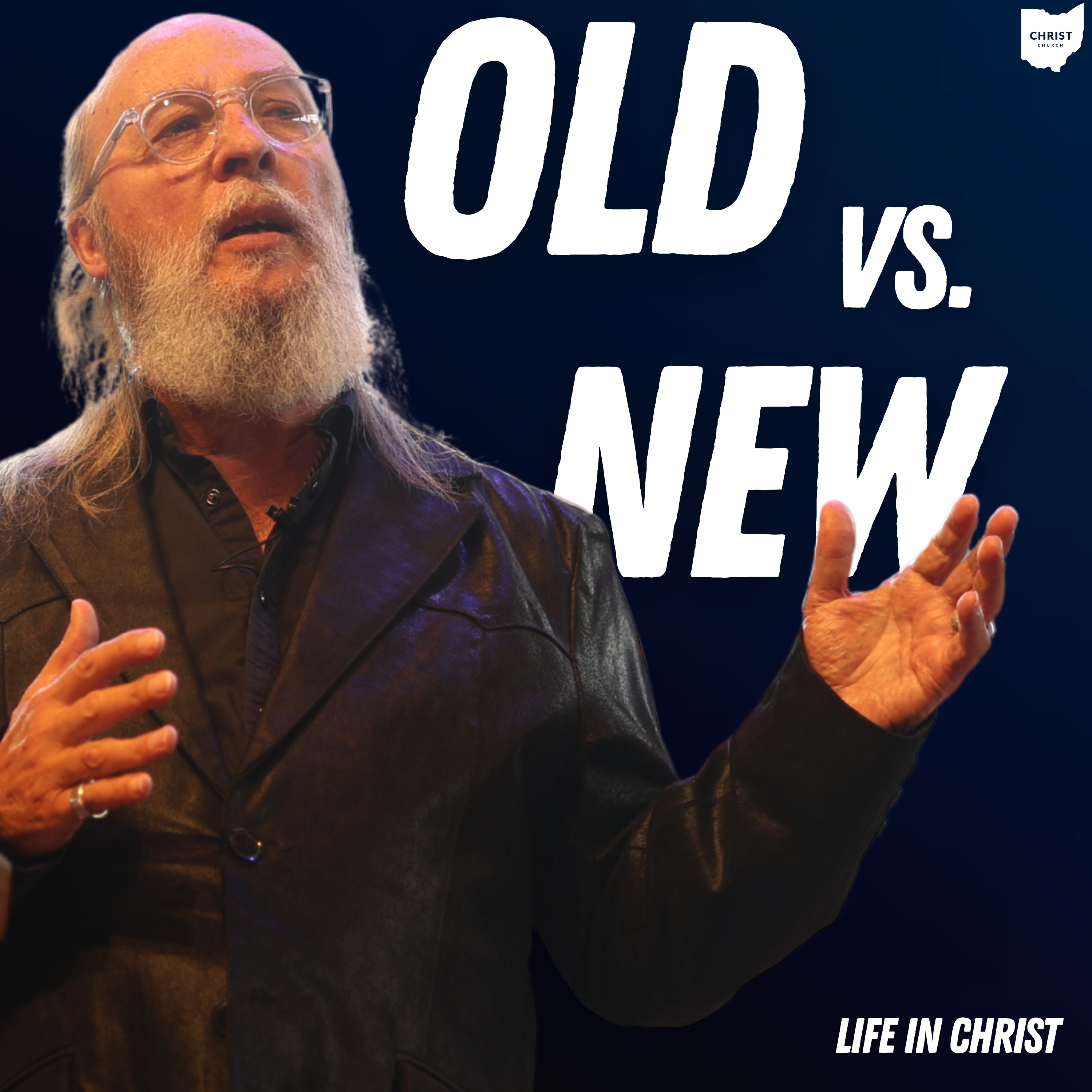
Episode Transcript
[00:00:02] Speaker A: I want to tell you something about the awesome church you go to.
I pulled into the parking lot this morning and I saw two guys from our safety team changing somebody's tire.
I haven't gone to Church since 1953.
I've been to a lot of churches, but I don't know, I have never been to a church that is actually more kind to each other than this church.
And I want to thank you for being awesome people.
This is such a beautiful crowd. I sometimes feel out of place.
Our dear Heavenly Father, you have invited us to live life in Christ Jesus.
You've said there is a better way to live than what our culture teaches us.
There is a more beautiful life than just surrendering to my indulgences.
There is a more meaningful life to be lived, and we live that life in Christ Jesus.
So I pray that one more time this morning your Holy Spirit would meet us here as only he can.
I pray that you would whisper to our souls in the kind of way that we are built up in Christ.
I pray that you would renew our mind so that Monday morning, ah, life in Christ is still an issue with us.
And I pray this all that Christ may be glorified in Christ's name.
[00:02:19] Speaker B: Amen.
[00:02:22] Speaker A: Last Sunday, we learned that Paul said, I have some very interesting ideas that I don't really have the vocabulary to talk to you about, so I'm going to use vocabulary that represents what I want to say.
And then he said, in every one of us, there is an old self.
And this old self is what is worst about us.
The part I don't like about myself is my old self.
He's selfish, he's grouchy, he's opinionated.
Okay, but then Paul said, because you are a Christian, there's more to you than just the old self.
When you became a Christian, Christ created a new self in you.
It is a self that is in his image.
And then Paul says, if you want to live life in Christ day by day, you have to put off the old self and put on the new self. All right, now, to say that as a concept, all right, that's pretty easy to say. Put off your old self.
[00:03:56] Speaker B: Put.
[00:03:56] Speaker A: Put on your new self. All right, but Monday morning when I'm getting ready for work, what exactly do I do to put off my old self?
Tuesday afternoon, when the pressure's on and my old self is demanding to be in charge, how do I put off the old self and put on the new self?
Well, Paul can be incredibly practical.
And in the verses we're Going to look at this morning.
Paul tells us eight ways that we can put off our old self and put on the new self.
Eight very practical ways to put off my old self and put on my new self.
The first one has to do with how I talk.
Look at verse 25.
Therefore, you push away from you the fault.
You push away from you the tendency to tell, to spin the truth, and you speak the truth, each to his neighbor, because you are members of one another.
Now, if you look at this statement, it has three parts.
The first part is addressed to my old self, and it says, you push away from you the fault.
The second part is addressed to my new self, and it says, and you speak the truth.
And then the third part of this says, why?
Because you are members of one another.
So we have an address to our old self. My old self will lie.
Your old self will lie.
Our old self lies to us. We looked at that last week. Our old self lies to people around us.
These lies can be very subtle. I've told the worst lies in my life by not saying anything at all, just letting something I knew wasn't true float.
I.
All right, so Paul says next week you're going to have the pressure on.
And they're going to be moments where you feel like twisting the truth a little bit, or you feel like covering the truth a little bit, or you feel like telling the story in the kind of way that the person you're angry with looks worse, or telling the story in the kind of way that you.
You boost your ego a little bit.
Paul says, that's the old self.
And when I feel that old self pressing me to play games with the truth, Paul says, that right there is where I have to say, that is my old self. And I'm pushing it away.
I am pushing it away.
And instead of doing that, I'm gonna act in my new self. And my new self speaks the truth.
[00:07:34] Speaker B: Do you hear this?
[00:07:35] Speaker A: My new self says, in the past, I would have spun this, but I'm not living that way anymore.
I am pursuing something better than that.
There is a richer life to be lived.
And I'm going to.
I'm going to speak the truth.
[00:07:57] Speaker B: All right?
[00:07:58] Speaker A: And then he says, here's the benefit of.
Creates unity.
You are members of one another.
Guess what?
You are a lot closer to the people you tell the truth than the people you lie.
Every lie builds up an emotional discomfort between us and other people.
[00:08:22] Speaker B: Do you hear that?
[00:08:23] Speaker A: When we lie to each other, we create an emotional discomfort, and it. And it fractures our Sense of unity.
We can do that, can't we?
We can. Be aware that I feel a tendency to mess around with the truth here.
[00:08:40] Speaker B: I'm gonna.
[00:08:40] Speaker A: I'm gonna say no to that old self, and instead I'm gonna speak the truth. Because I believe that in speaking the truth, it creates a stronger bond between me and the people that trust me.
All right, let's look at the second one.
Ah.
[00:09:03] Speaker B: Ah.
[00:09:04] Speaker A: This one I hate to preach on because I'm looking in the mirror, but here it is.
[00:09:10] Speaker B: Ah.
[00:09:11] Speaker A: Be angry and do not sin.
Don't let the sun go down on your provocation.
Ah.
Do not give a place to the devil.
All right, now we have the three things again.
My old self.
What is. How does my old self operate? Well, my old self gets angry and does angry and says angry things.
My old self gets angry and acts in an unpleasant way.
My old self says, I have every right to be angry, and this isn't sin.
[00:09:59] Speaker B: Church.
[00:10:02] Speaker A: Paul says, that old self is what we have to put off.
I have to stop playing games with myself about anger.
I have to confront my anger.
All right, now look what he says.
Ah.
Sometimes it's hard to confront our anger, and it takes a little space.
Ah.
It's easy for me to deal with my anger if I have a little wiggle room, you know what I mean? Where I have a little time between dealing with my anger and yelling at somebody who's driving in a Antichrist kind of way.
How dare you be on my road.
Ah.
[00:11:02] Speaker B: All right.
[00:11:03] Speaker A: So Paul says, I understand that the emotional hype that anger creates.
I understand that it sometimes takes a little time. He says, but I'm giving you a time limit.
Don't let the sun go down with you in an excited state of irritability.
[00:11:30] Speaker B: Do you hear this?
[00:11:34] Speaker A: Do not let the sun go down with you thinking angry thoughts.
Do not let the sun go down with you saying, the next time I see this person, I'm going to say
[00:11:51] Speaker B: church.
[00:11:52] Speaker A: Paul says, anger might take you a little bit.
You get time to find your equilibrium. But don't let the sun go down on your anger, on your provocation, on your.
On your irritability.
He said, the new man will not let the sun go down on this unresolved anger. The new man says, enough is enough. I'm drawing a line here. I'm not going to allow this anger to morph into resentment.
And then he says, why?
Because if I don't deal with my anger, I create a comfortable living space for the devil in my inner self.
I create A I invite him in, I let him have the best chair in the living room and I start serving him drinks and snacks.
If I don't deal with my anger, I'm creating space for the devil. Now let me remind, Let me remind you what the name devil means.
Diabolus.
And it literally means the one who slanders the slanderer.
Do you know many of our angry thoughts, ah, are slander.
We're thinking the worst about that person.
We're telling ourselves the worst about them.
And literally in our anger, our self talk is full of slander. And why should we be surprised because the devil is the slanderer.
[00:13:54] Speaker B: Do you get this?
[00:13:55] Speaker A: The more I allow anger to push my inner thoughts about people, the uglier those inner thoughts are going to be. Because that's how he works, Church.
The unholy one never shows you the beauty, the good, the joy, the wonder of each other. He only shows you the ugly.
He always twists everything and makes it a little worse.
He always says to you, you don't deserve this. You shouldn't be treated this way.
And so Paul says, if you're gonna put off the old man and you're gonna put on the new man, you gotta start confronting your anger.
Don't let the sun go down on your anger. And don't create any space in your heart by holding on to anger for the unholy one.
I think that's good advice.
[00:14:52] Speaker B: Do you?
[00:14:57] Speaker A: And then he goes on to say, lost my spot.
Verse 28.
The one stealing cannot steal any longer, but must labor working with his own hands what is good in order that he may be able to to share with those having need.
Here we have the three again. The first is the address to the old man.
If you have been stealing, stop stealing.
Here's the dress to the new man.
Work, work.
And here's the reason why.
Because in work, God will bless us.
And he'll not only give us enough to support ourselves, he will give us enough to be generous.
Now let's look at all three of these.
Very few people are willing to admit that they've ever stolen anything.
Okay, but whether you're honest with yourself or not, everybody in this room has stolen something.
Everyone in this room has stolen something. We're all thieves, you say, Doc? I've never stolen anything. All right, let me ask you a couple of questions.
Have you ever stolen time at work?
You were getting paid, but you found ways to avoid doing what you were getting paid for and did something else.
[00:16:52] Speaker B: Huh?
Ah, ah.
[00:17:01] Speaker A: We all have.
I worked at A place when I was going to college and it was the evening shift, and these people had a deal where they would work till they got their work done and then they would punch each other's cards out.
So they would work four, five hours, leave, somebody would punch their card out, then it would be their turn. The other people would leave, that person would stay. And when they explained the little deal to me, I said, yeah, I can't do that.
I'm not.
I'm not.
I will never ask you to punch my card, and I'm never going to punch your card.
It made the boss of the shift angry, and he started giving me the crappiest jobs.
But guess what? I didn't steal church. All right, how about this?
You ever stole an idea?
Have you ever taken credit for an idea that really wasn't your idea?
Ah, how about this one?
Have you ever defrauded someone of a kindness that you knew they needed and deserved?
Ah, I have stolen kind words from my wife.
She deserved those kind words.
She deserved them, Without a doubt.
And I've been in one of my grouchy moods, and I just said to myself, I'm not saying it.
Well, there it is.
You knew I wasn't perfect anyway, right?
See, in many subtle ways, we do steal.
And Paul says, that's the old man.
That is the old man.
And the old man will always lie to us, and he'll always say, it's not so bad, right?
But Paul says, when you have that sense that I can't be stealing time,
[00:19:41] Speaker B: All right?
[00:19:42] Speaker A: I can't be stealing other people's ideas.
I can't be defrauding the people I love of the kindness that they deserve, I can't do that. That's the old man. And no matter how much my old man says, it's all right. I have to put away the old man, and I have to do what the new man does. And the new man says, even if it takes more work, I'm going to do it.
Even if it takes more work, I'm going to do it. Listen to what Jesus once said.
If somebody compels you to go a mile with them, don't listen to your old man and go half a mile.
Listen to your new man and go two miles.
You know what he's saying?
Ah. The new man works as hard as is necessary.
The new man isn't looking for shortcuts and cheap approaches to life.
[00:20:49] Speaker B: Can you hear this?
[00:20:51] Speaker A: The new man says, I'm going to figure out how much work it takes. And I'm Going to put the work in.
[00:20:59] Speaker B: Do you hear this?
[00:21:00] Speaker A: And then we get the reason why so that God prospers us.
We have enough to be generous.
So I'll tiptoe around this as much as a man with feet as big as mine can.
Paul connects generosity with not stealing.
Paul is implying that every one of us have been blessed by God and we have something of value that is worth sharing.
And if we don't share it, we are in fact stealing.
I think of it this way.
God says, I'm giving you more than what you need, but I'm not giving you more than what you need.
So you can just start being Scrooge McDuck and piling it all up and going swimming in it.
I'm giving you more than you need because I'm gonna place opportunities in your life for you to be generous when you labor. God says, I'm going to bless you and I'm going to bless you beyond your needs and wants and all that extra blessing that is so you can be generous and you can be his partner in accomplishing in the world what he wants to be accomplished.
This is a very generous church, but I always want to be. I always want to be measuring my heart. I always want to say, am I living in the new man?
Is my new man looking for opportunities to be generous? Or is my old man making excuses why I don't have to be and why it's not my problem and why somebody else should worry about it?
Can you hear me, church?
So Paul says the new man has a work ethic.
And that work ethic is an ethic that will be blessed in life.
And as we are blessed in life, we become God's partners in generous giving so that the work of God gets done in the world and. And Jesus Christ is glorified.
That makes sense to me.
All right.
I forgot what number on. But if you're counting good. All right.
Ah.
Verse 29.
Do. Do not let any rotten word come out of your mouth.
But what is good?
What builds up the needs of others?
I'd like to work. I'd like to start with this word for rotten.
It is a. It is a more literal translation than the softening of the English.
And I think it's corrupt, isn't it? What does English. Yeah. Let no corrupting talk. This is actually the word for rotten.
None of us want to put anything rotten in our mouth.
If we had a little table out there and I picked up the roadkill on Mark's Road this morning and a couple of the Guys skinned it and, and we had the grill going.
I doubt there is anybody in this room who hates themself enough that they would eat the rotten roadkill.
Am I safe on saying that we have a basic human repulsion about putting rotten things in our mouth?
[00:25:33] Speaker B: Ah.
Ah.
Ah.
[00:25:37] Speaker A: Have you ever bitten into an apple or something and then you, you looked at it and you go, ah, I'm spitting that out.
We don't like the idea of having rotten things put in our mouth. All right, so Paul is turning it around. If you don't want to put anything rotten in your mouth, don't let anything rotten come out of your mouth.
Is that a beautiful image?
Paul says if have the same revulsion about putting. Letting rotten things come out of your mouth that you have for putting rotten things in your mouth.
Ah, I can work with that. Church, he says, this is the old man.
It wants to say rotten things.
Always criticizing, always fault finding, always ugly.
Ah.
Put that away.
Stop letting rotten stuff come out of your mouth. Instead, you have options.
You can.
You can say things that build people up and encourage them.
You can inspire the people around you.
You can talk to people in the kind of way that you are. A breath of fresh air, church.
It turns out the way we talk to people, it's either like living in Cleveland a couple of days ago when the air was yellow and you could taste it, or living in Cleveland on a beautiful, crisp winter day when the air is absolutely perfect and you inhale and your lungs say, I love the life in northeastern Ohio.
We create an environment around us. And my old man creates a rotten, corrupting environment by what he says, my new man creates a fresh, a healthy, a vibrant, a encouraging environment.
By what he says, we end up being a blessing and a refreshment to the people around us because what we say is building them up.
And then Paul says, why?
He says, ah, because in doing this, ah, they hear grace.
[00:28:23] Speaker B: Ah.
[00:28:23] Speaker A: Remember, grace is we treat people better than what they deserve. Listen to what God says.
When you put away your old man and you stop letting rotten things come out of your mouth and you put on your new man and you start blessing and encouraging people, you are filling them with grace by the very things you say.
Maybe they can't get grace from God. Maybe they feel far from God like Mother Teresa was talking about. Maybe they, maybe they feel alienated from God.
But when you show up speaking from the new man, you are actually mediating the. The grace of God to them.
Grace that they may not be able to get in any other way. Than by you speaking the words of life to them.
[00:29:19] Speaker B: Do you hear this?
[00:29:22] Speaker A: Ah.
Verse 30.
Do not grieve this the Holy Spirit of God in whom you were sealed to the day of redemption.
My old man creates an environment that the Holy Spirit is not comfortable with.
[00:29:51] Speaker B: Can you hear this?
[00:29:52] Speaker A: My old man gets on the Holy Spirit's nerves.
Ah.
[00:29:59] Speaker B: Ah.
[00:30:00] Speaker A: My, my old man doesn't tell the truth and the Holy Spirit is grieved.
My, my old man lives in anger and the Holy Spirit is grieved.
My old man is selfish and, and steals and. And the, and the Holy Spirit is grieved.
My old man lets rotten things come out of his mouth and the Holy Spirit says, oh, please, not this again.
[00:30:32] Speaker B: Church.
Can you hear this?
[00:30:35] Speaker A: There are qualities in people that the Holy Spirit likes to be around and there are qualities in people that make the Holy Spirit uncomfortable.
Just like you.
There are people that when you're around them, your sense of well being goes down, right?
There are people that when you are around them, it's hard to maintain a joyful spirit.
They just bring you down.
[00:31:07] Speaker B: Well.
[00:31:09] Speaker A: Paul is saying, if you want to live life in Christ, you got to put off the old man and you got to start being the kind of person that the Holy Spirit says, I like hanging around with this person.
I enjoy listening to this person speak the truth in love.
I enjoy seeing this person confront their anger and not give any place to the devil and create a better place for me.
I enjoy seeing this person work and I enjoy their generosity.
I either create a very comfortable space for the Holy Spirit in my heart or I create a space that the Holy Spirit is continually saying, oh, come on dude, not this again.
We don't live this way.
You're a new man.
You have better. You have better potential.
Look at the faces of the people around you. Can't you see that you're not blessing anybody?
[00:32:24] Speaker B: Ah.
[00:32:25] Speaker A: So Paul says, we put off the old man by stop doing the things that make the Holy Spirit uncomfortable.
We put on the new man by doing the things that make him comfortable. And then he tells us why.
Because you are sealed in the Holy Spirit until the day of redemption.
Ah.
The Holy Spirit is the seal of God on my life.
The Holy Spirit is the one that is God within my heart saying I belong to him.
The Holy Spirit is the one holding me until the final day of redemption and our souls are made perfect in God and I don't want to have a bad relationship with Him, Church.
He is my only hope for a Christian life.
Ah.
Verse 31.
All bitterness.
Ah.
Anger, wrath, shouting and blasphemy. Ah.
[00:33:51] Speaker B: Ah.
[00:33:52] Speaker A: You put away from you with all bad.
Now there are a bunch of unique words here and I'm just going to touch on them briefly.
The first word for bitterness, this is the idea of.
An irascible relationship with life.
Irascible comes from. Let's do another vocabulary word. It'll be on your test next week.
It comes from the Latin word ira that means anger and it goes from aira to ira, see, which means you are in a continual state of anger.
An irascible person is angry all the time.
Do you know people who are angry all the time, they're irascible, that they're just angry with life.
Paul says, that's the old man.
You gotta find a way to make peace and not be irascible.
Angry with life all the time.
Then this second word is. These second two words is one is like a temper flare up and the other is a brooding anger.
So the first word is come to terms with your temper.
Stop losing your temper.
The second word is ah.
[00:35:39] Speaker B: Ah.
Ah.
[00:35:42] Speaker A: Come to terms with ah.
Some of the deep seated anger.
It's not that you're angry all the time, but you're always angry about this, you see?
Ah.
So maybe you had a marriage that was just. It broke your heart and you're not angry all the time, but every time you remember certain incidents from that, you feel that old anger and it, and it just, it never abates. It's there all the time and it lingers year after year.
So Paul says, deal with your temper flare ups. But he also says, start paying attention to some of these deep rooted angers that you've held onto for way too long.
Deal with that deep seated anger so that you can remember things and not have any anger take charge again.
Ah.
And then he says, ah.
Don't shout at each other.
[00:36:51] Speaker B: Pretty good.
[00:36:53] Speaker A: Pretty good advice.
Doesn't count preaching though.
Jesus lifted up his voice and said, all right.
[00:37:06] Speaker B: Ah.
[00:37:08] Speaker A: This last word is blasphemy.
And we usually associate blasphemy with God. But literally in the culture when Paul used, it was a disposition to say mean things about people that are hurtful.
[00:37:33] Speaker B: Ah.
Ah.
[00:37:35] Speaker A: Did somebody in your life ever say to you, if you can't say something nice, that's kind of a Bible thing.
Ah.
Ah.
[00:37:49] Speaker B: Ah.
[00:37:50] Speaker A: Paul is saying, your old man will feel free to say mean things about other people.
Put it off.
Put on the new man. If you can't say anything nice, don't say anything at all.
All right?
Instead, instead of these things that I just mentioned, that's speaking to the old man. Now we're gonna speak to the new man.
You be kind to one another, compassionate and forgiving, even as God in Christ forgave you.
Now, what he's saying, when you're living next week and you start feeling irascible, you start feeling angry.
You remember an old anger.
Ah, ah, ah. You feel like raising your voice to someone, put off the old man and put on the new man.
And the new man, instead of being angry, instead of insulting, instead of losing his temper, the new man is kind, compassionate and forgiving.
[00:39:19] Speaker B: Did you hear that?
[00:39:20] Speaker A: If I'm gonna live life in Christ Jesus, I have to put on the new man. The new man doesn't give in to the pettiness and the anger and the resentments of the old man. The new man says, I'm dealing with this in a different way than I used to.
In the past, I'd get mad about this in the past. I'd have my say about this in my. In the past, I would tell people a thing or two. But I'm not living in the old man anymore.
And I'm going to approach this very same problem in a radically different way.
I'm going to be kind, I'm going to be compassionate. And if I have to, I'm going to forgive whatever I have to forgive. Now I'm living in a new man.
Now I'm living in the new man.
And the quality of my life goes up.
And there's something of God about me.
And people sense the reality of God in a clear way.
All right, I'm running out of time. I'll do the last two real quick. Chapter 5, verse 1.
Be an imitator of God as beloved children.
There was a time when I saw a lot of these little rubber bracelets that have the printing on them, you know, and it had what would Jesus do?
And then that got mocked. People, of course, the mockers mock, but I think that's a pretty good question.
I think that's a really good question. I'd like to be an intimate. I would like to be an imitator of
[00:41:09] Speaker B: Jesus.
[00:41:12] Speaker A: Can be. I remember being a boy playing Little League baseball, and the Cincinnati Reds were really good.
And when Joe Morgan batted, he had this thing he did with his arm. Does anybody remember this? He kind of flapped his arm. Cincinnati.
[00:41:27] Speaker B: All right.
[00:41:28] Speaker A: Well, wouldn't you know it?
I saw that on TV.
Next week Little League baseball. I'm in the batter's box. I'm flapping away. If it helps Joe hit the ball, it'll help me hit the ball. All right, listen, we learn a lot of things by imitation.
Do you remember learning to print? And you had these little worksheets and had the dotted lines and you had that big giant pencil and you would connect to the lines, you imitated
[00:42:06] Speaker B: the
[00:42:07] Speaker A: pattern and you learned to write.
And some of you learned to write in such beautiful ways.
The rest of us are still with the big pencil and.
All right, that's what Paul is saying. I'm gonna make living life in Christ Jesus easy for you. I going to make it easy for you to recognize.
To recognize.
Just be an imitator of God.
Just imitate what you think Jesus would do, which is why you got to read the Gospels again and again and again and again.
All right, one more thing.
When I'm an imitator of God, what should I focus on?
[00:42:51] Speaker B: Because.
[00:42:51] Speaker A: Because God is infinite and I can't focus on everything.
So Paul says, when you're imitating God, walk around in love, even as Christ loved you and gave himself in behalf of you a sacrifice and an offering to God, a very pleasant aroma.
You know what he says here? When you're imitating God, you have to love people the way Jesus loves you.
And you know what that means?
It's gonna have some self sacrifice.
You can't put off the old man and put on the new man and not self sacrifice.
[00:43:35] Speaker B: You get it?
[00:43:36] Speaker A: I can't be an imitator of Christ and not have self sacrifice.
My old man says, you deserve to swear at those people.
My new man says, yeah, but I'm imitating Christ now, so I'm gonna sacrifice what I think I deserve to do. And I'm gonna imitate Jesus Christ.
Ah, ah.
The old man says, you deserve that watch.
Doesn't matter that you already have five on your watch tray. And ah.
And the new man says, well, maybe I do, but I'm gonna sacrifice that and I'm gonna be an imitator of Christ and I'm gonna do something generous instead.
Do you see what he's saying? When we live in imitation of Jesus Christ, we're going to be living in a more loving way. And that means in the very same way that Christ made the sacrifices he had to make, we make the sacrifices we have to make to live life in Christ Jesus because it's worth every bit of it. Our dear Heavenly Father, thank you for this wisdom that you share with us.
Thank you for these ideas.
I pray that you would help them be rooted in our thinking. And I pray that tomorrow, when we need these ideas, your Holy Spirit would remind us of them.
I pray that when we're tempted to live in the old man, we would put off the old man and we would put on the new. And we'd be created more in your image.
We would put off the old man and we would put on the new. And we would be imitating you to the very best of our ability.
And people would see the light, the beauty and the majesty of Jesus Christ in us.
Amen.